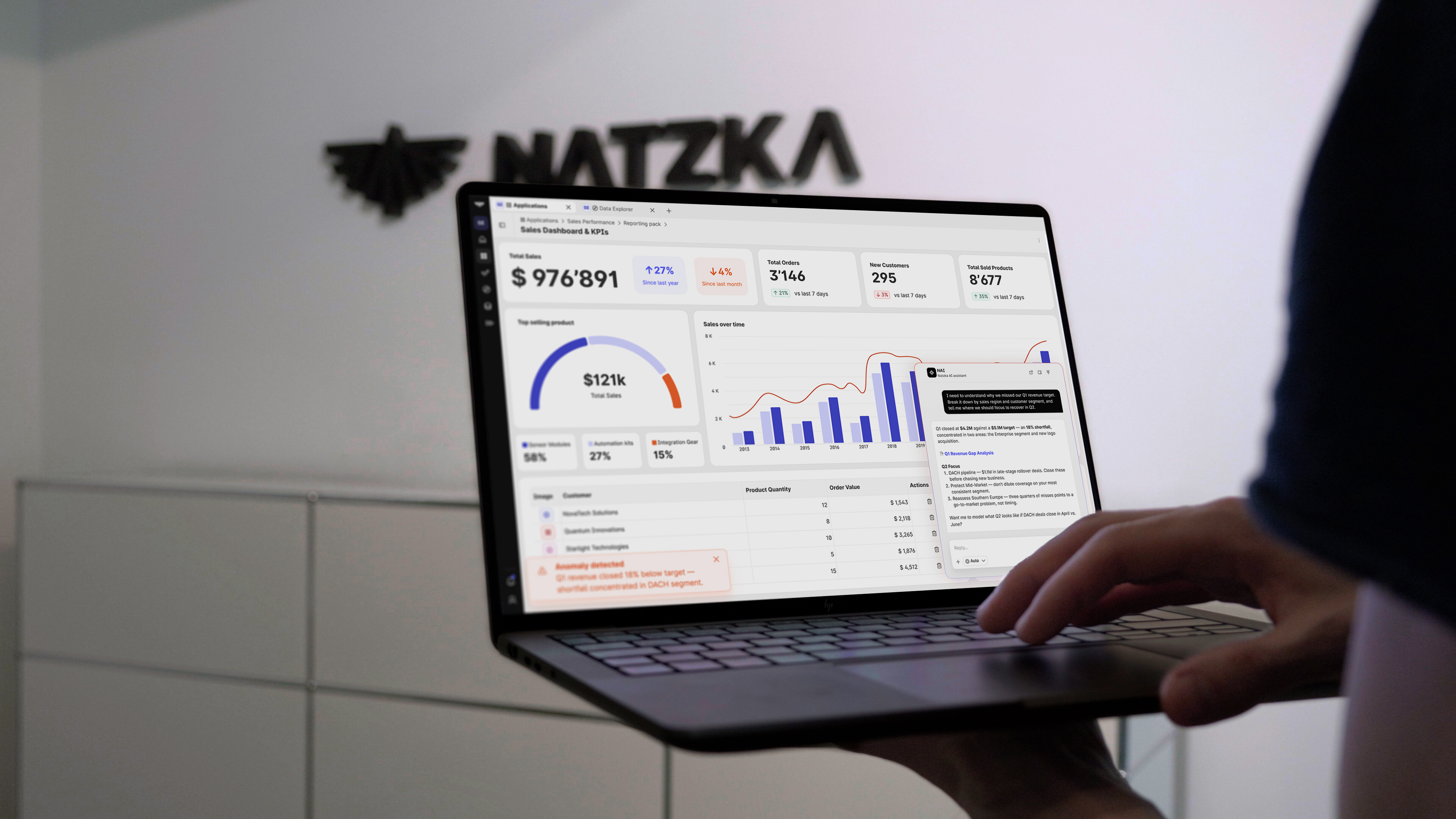
Early experiments with agentic AI are struggling for a reason. Natzka is proposing a better approach.
Everyone knows the playbook you’re supposed to follow: Run an artificial intelligence (AI) pilot project, see how well the technology works and then deploy it in the field. However, pilots are increasingly stalling, leading market research firm Gartner to predict that more than 40% of agentic AI projects will be scrapped by the end of 2027.
The usual scapegoat is the model behind an AI agent. People assume that it is too limited in its ability to handle complex multistep processes. They worry that the risks of hallucinations or poor responses are too significant. Some wonder if a model includes enough human oversight or too much autonomy.
These weaknesses make a credible-sounding business case for putting pilot projects on an indefinite pause. Unfortunately, they ignore the basic underlying problem. Most organisations don’t realize that when agentic AI pilots disappoint, it’s because they’ve hit an orchestration wall. This is the problem that Natzka is focused on solving through a decision-centric operating layer.
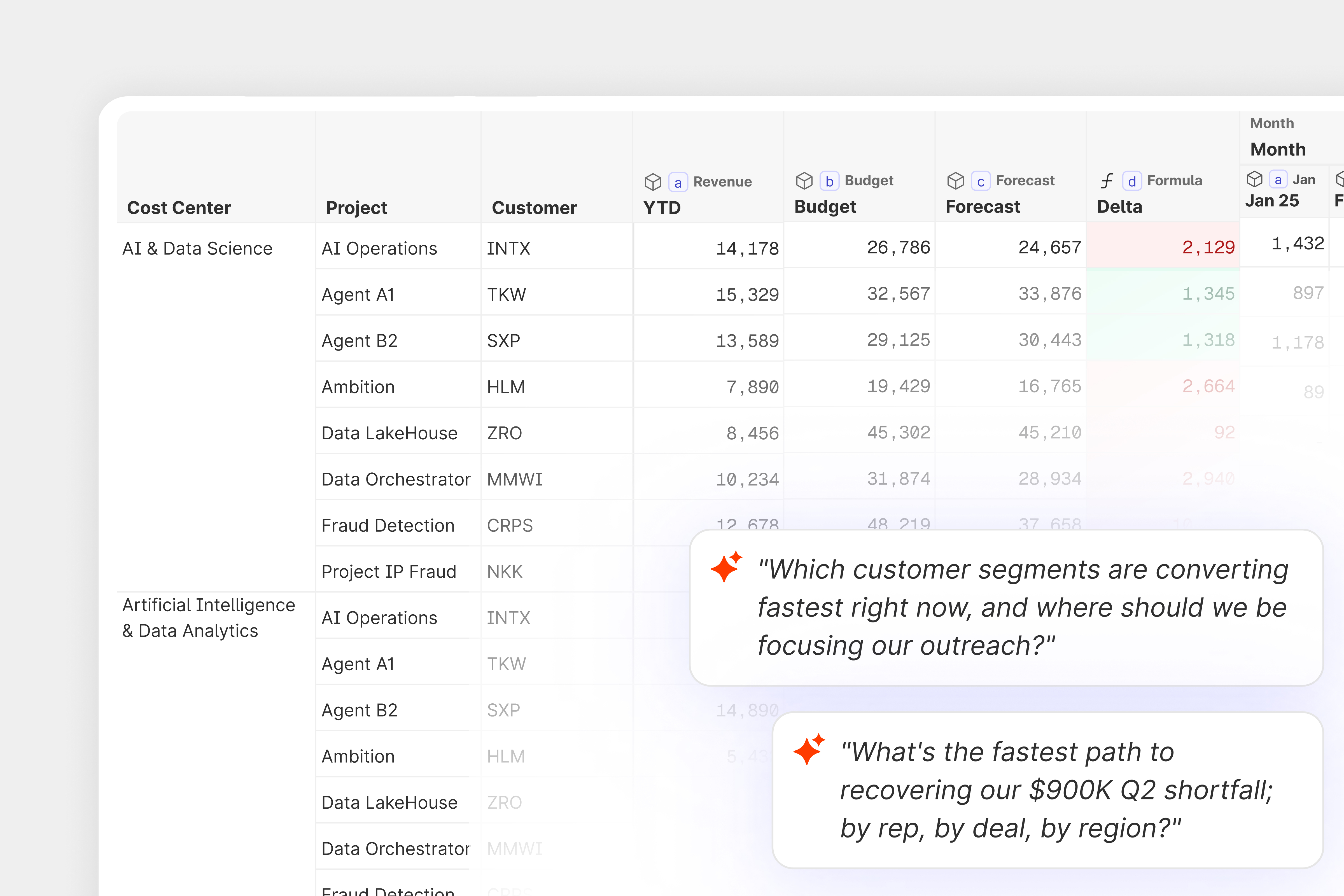
In most organisations, data is fragmented across systems, and AI tools are not embedded into the workflows where decisions actually get made. Even when integration has been addressed, organisations often fail to ensure that the tools and systems running AI are woven into everyday operations and workflows.
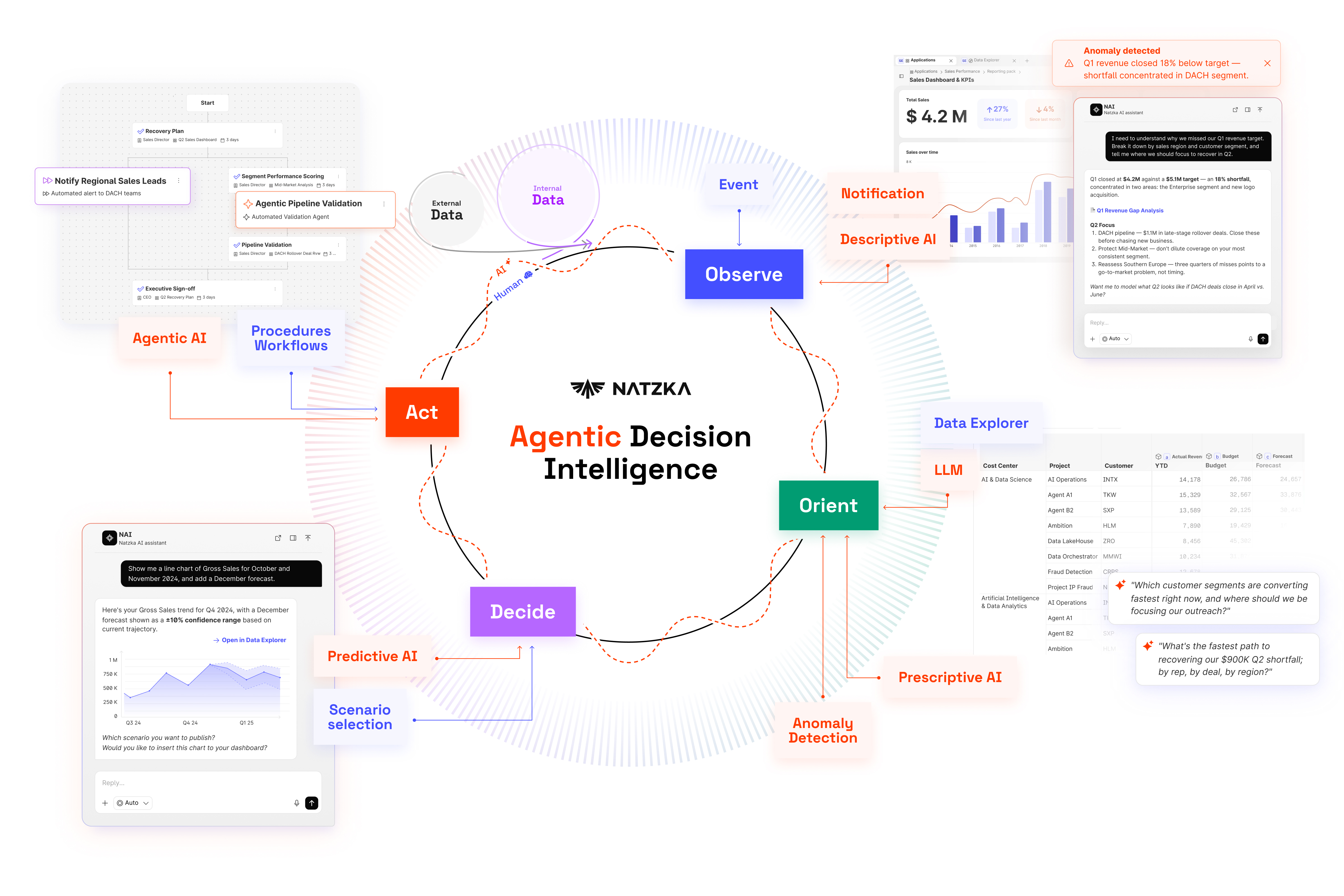
AI offers the chance to not only observe signals, run scenarios and recommend actions but also to execute them and log the outcomes for ongoing learning. To get there, you need orchestration based on a new approach. Natzka describes this as agentic decision intelligence: a decision-centric operating layer that turns AI from insight generation into governed execution.
How agentic decision intelligence works
As humans, we think and then we act. Agentic decision intelligence is akin to this in unifying fragmented data into a decision model you can regard as a digital brain that encompasses context, business logic, constraints, ownership and decision memory. Equally important, however, is having digital hands that can draw on that brainpower and take the appropriate actions.
In the manufacturing scenario, these digital hands would include an AI agent based on business logic that monitors supply chain status and raises an alert when something goes wrong. A second agent could then act as a production planner, running through scenarios such as whether to shift capacity to another plant or place a hold on high-margin stock-keeping unit (SKU) production.
A finance AI agent, meanwhile, can estimate the effect these actions could have on critical areas such as cash flow, overtime, expedited shipping and bottom-line revenue. A human must make the final call, given that there are more than technical considerations at play, such as the customer’s tolerance for delays or pricing fluctuations.
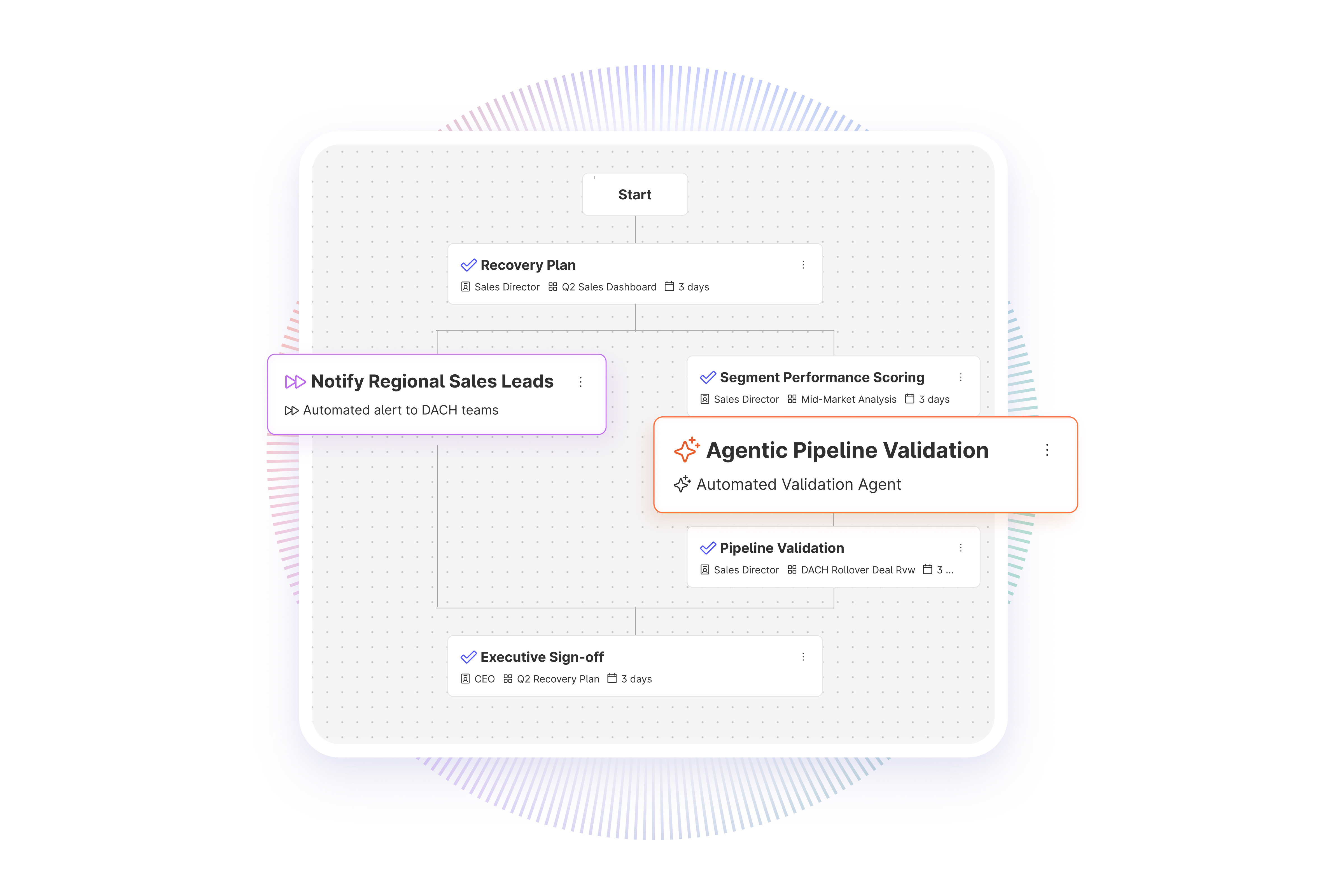
Natzka’s perspective is that AI agents are monitoring data and also proactively proposing scenarios to help humans make decisions. AI agents can eventually decide and act autonomously, but in practice the stronger model is augmented intelligence: AI supports human judgment and acts within clear constraints where appropriate.
Agentic decision intelligence works just as well in sectors such as retail when holiday demand spikes for a best-selling item, making it easier to adjust promotions and store replenishment cycles. Agentic decision intelligence can help evaluate those trade-offs, recommend next steps, and coordinate action across functions. There are applications in nearly every industry.
Beyond the insights engine
AI creates value only when it can act safely on company data, within company logic and context, rather than as a generic insight engine. Natzka decision intelligence orchestrates augmented execution with a combination of humans and AI, enabling automation with clear ownership, policy constraints, traceability and auditability. It also changes how organisations measure ROI, improving time-to-decision, time-to-action, risk management, and business outcomes such as customer retention and revenue.
How Natzka is demonstrating a better way forward for agentic AI
There are arguably too many complex decisions coming at an organisation every day for human teams to sift through all the available data and options on their own. Enterprises need technology to ensure that decisions do not remain unstructured, undocumented or difficult to govern and that they’re linked to measurable outcomes.
Turning AI pilots into operational capability requires organisations to establish a decision-centric layer that unifies data and context into a shared decision model; embeds decision logic into real workflows; orchestrates agents and systems across steps; and applies governance through approvals, roles and audit trails. That is what turns AI from an isolated pilot into an operational capability.
This is the opportunity Natzka sees with agentic decision intelligence: turning AI into a reliable, governed execution layer for enterprise decisions.