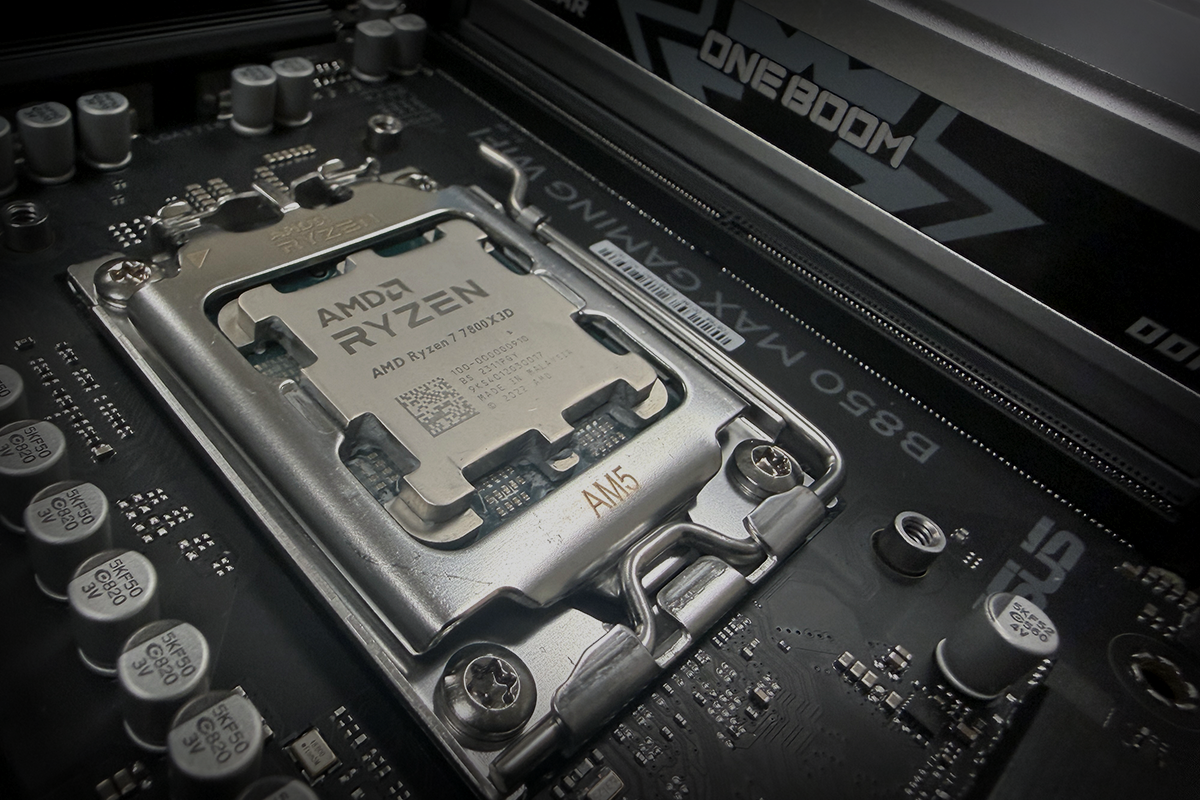
Anyone who has priced out a gaming PC build lately, has probably noticed that RAM costs way more than it used to. A $1,000 system from a couple of years ago now runs $1,300 or $1,400 before making a single upgrade. The culprit? AI. Specifically, RAM prices are rising because of the massive infrastructure buildout happening at data centers run by companies like Google, Microsoft, and Amazon.
Training and running large AI models requires enormous amounts of a specialized type of memory called high-bandwidth memory, or HBM, and the factories that make it are the same ones that make the RAM in gaming PCs. When hyperscalers came knocking with giant contracts and money to spend, memory manufacturers had a choice. They could keep serving the consumer market, or pivot toward far more lucrative AI deals. The choice wasn’t hard.
“The industry really wasn’t prepared for that type of shock,” said Namanh Hoang, Director of Branding and Marketing at CyberPowerPC. “AI came on us quickly, and the rate of acceleration was well beyond expectations. Hyperscalers started investing so much, so suddenly into infrastructure, it consumed a huge portion of the factory capacity for producing consumer memory, and building more factories to meet demand will take a lot of time.” As a result, supply tightened, and prices rose.
Smaller capacity RAM sticks have roughly doubled in price over the past six months, but prices for high-capacity modules — the 64GB to 128GB sticks that power serious gaming builds — have tripled or quadrupled, and they were already scarce before the AI infrastructure boom got started. Memory fabrication capacity takes years and billions of dollars to expand, and there’s no quick fix on the horizon. Climbing RAM prices will likely be a feature of the market for quite some time.
Single channel memory: An unintuitive alternative
For most of PC gaming history, running a single RAM stick was considered a rookie mistake, and for good reason. A dual channel build lets the memory controller talk to two memory sticks simultaneously, so it’s a bit like having two lanes on a highway instead of one. In the early 2000s, going single-channel could slow gaming performance anywhere from 5% to 15%. Dual channel became non-negotiable for anyone serious about their machine, and the stigma stuck.
But the underlying hardware has changed dramatically since then. Even modern mid-range CPUs ship with much larger on-chip caches than their predecessors. The more data that can sit on the cache, the less often the CPU needs to reach out to system RAM. As Hoang puts it, “The sacrifice going from two sticks to one is not as serious as it used to be. You can achieve near dual-channel performance in a single-channel configuration. The question becomes where you want to invest your money?”
In most modern games, the answer is probably not in a second RAM stick. Most gaming data requests are handled by the CPU’s cache before they ever touch system memory. When memory bandwidth is rarely the bottleneck, the gap between one stick and two narrows to something a gamer would struggle to notice in actual play.
Where AMD’s X3D takes this even further
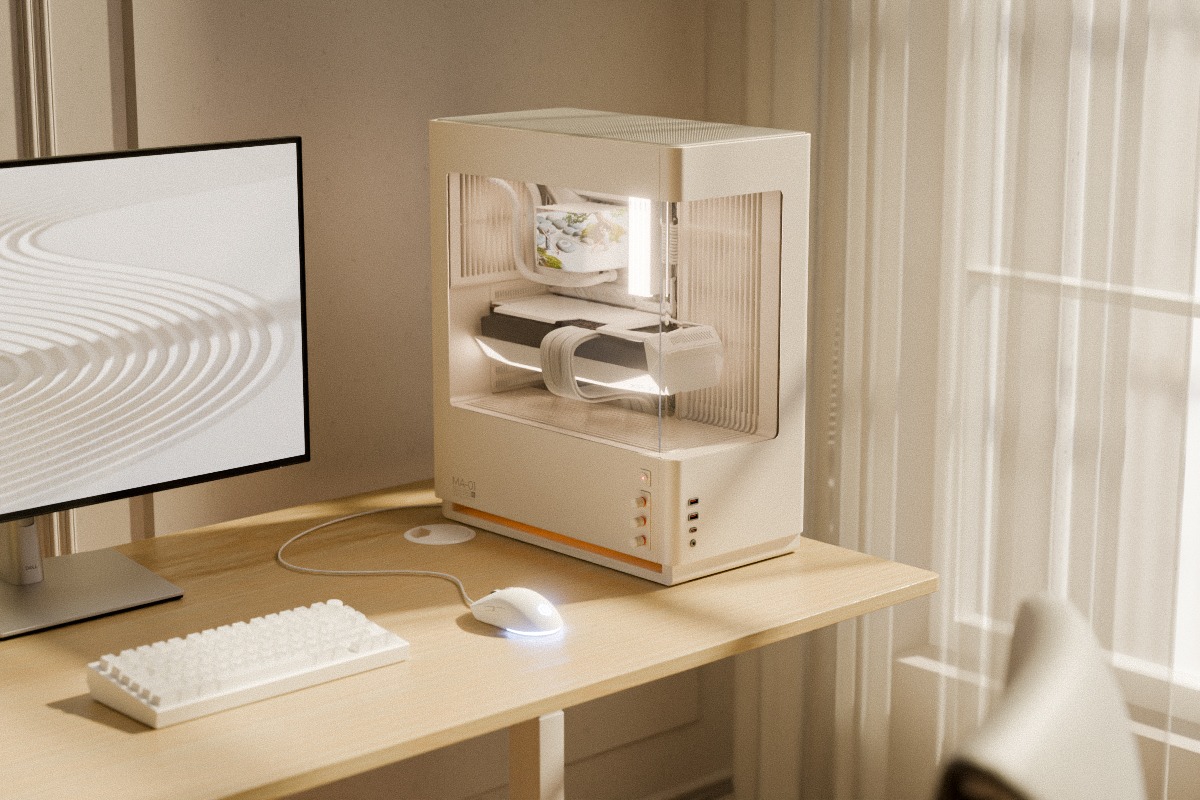
AMD’s Ryzen X3D processors push this dynamic to its logical extreme. The X3D line uses a technology called 3D V-Cache, which physically stacks additional cache on top of the processor die. The result is a chip with a massive amount of on-board storage for game data, which drastically reduces how often it needs to go looking for information in system RAM.
“With extra cache stacked directly on top of the processor, the CPU doesn’t have to access the system RAM as much because more can be stored closer to where it’s needed,” said Anthony Van Kline, NA Gaming Marketing Manager at AMD, “which results in smoother gameplay, higher frames per second, and less waiting.”
For the RAM debate specifically, the performance gap between single-channel and dual-channel shrinks to less than 2% in most gaming scenarios. That’s well within the margin of variation one would see from one gaming session to the next. Running a single stick on an X3D chip is a legitimate budget choice, and it provides a clean upgrade path to add a second stick later when prices stabilize.
The AMD platform advantage
There’s another reason the X3D story is worth paying attention to beyond just the cache. AMD makes both processors and graphics cards, and when paired them together, gamers get a capability called Smart Access Memory. This feature enables the CPU and GPU to share data more freely, rather than shuttling it back and forth through a bottleneck. Games that support it see a significant performance lift. In practice, this means an AMD Ryzen X3D paired with a Radeon RX 9070 XT can extract more performance from the same hardware than a mismatched setup would.
“AMD is one of the few brands that has a complete ecosystem across GPU and CPU,” Hoang said. “With their software, they can better optimize how the two are being used together and move workloads between processor and graphics card dynamically. It’s better utilization because they understand each other in a way that chipmakers without that full-stack relationship simply can’t match.”
CyberPowerPC has built out AMD Ryzen X3D and Radeon systems across its lineup at multiple price points, with single-channel configurations as a deliberate option, not a stripped-down fallback. In a market where RAM prices have spiked hard and GPU costs are also climbing, every dollar of flexibility matters. And when phone launch cycles ramp up seasonal demand for consumer memory, pricing pressure may get worse before it gets better.
So, for a gamer building or buying a new PC right now, the calculus has genuinely shifted. AI ate a significant chunk of the memory supply. On-chip cache has absorbed much of what system RAM used to do in games. And on an X3D processor specifically, the performance penalty for single-channel is so small it barely registers. The old rule about matched pairs was right for its time. The hardware has just moved on.
If you’re ready to build smarter in a market where every dollar counts, explore how CyberPowerPC’s AMD Ryzen X3D systems are designed to maximize performance without overinvesting in inflated memory costs.